Corporate flowers Maida Vale office contracts and pricing
Posted on 01/06/2026
If you are comparing Corporate flowers Maida Vale office contracts and pricing, you are probably trying to answer a fairly practical question: how do you keep an office looking polished, welcoming, and consistent without spending more than you should? That is exactly the right starting point. Office flowers are not just decoration. In the right setting they can soften a reception area, lift a meeting room, and make a first impression feel more considered. In Maida Vale, where many workplaces want a calm but professional feel, a well-structured flower contract can be a small detail that quietly does a lot of heavy lifting.
What tends to catch people out is that "corporate flowers" can mean very different things depending on the office. A weekly reception arrangement is a different commitment from a full serviced scheme with seasonal changes, multiple floors, and event deliveries. Pricing follows that same pattern: simple plans can be refreshingly straightforward, while bespoke contracts depend on frequency, vase hire, design style, delivery timing, and how much maintenance is included. In other words, there is no one-size-fits-all answer. But there is a sensible way to approach it, and that is what this guide is for.
Below, you will find a practical breakdown of how office flower contracts work, what affects cost, where the value usually sits, and how to choose a plan that actually suits your workplace. If you are also weighing up a broader delivery setup for your team, the local flower delivery service in Maida Vale and the corporate accounts option may be useful starting points.
Table of Contents
- Contents
- Why Corporate flowers Maida Vale office contracts and pricing Matters
- How Corporate flowers Maida Vale office contracts and pricing Works
- Key Benefits and Practical Advantages
- Who This Is For and When It Makes Sense
- Step-by-Step Guidance
- Expert Tips for Better Results
- Common Mistakes to Avoid
- Tools, Resources and Recommendations
- Law, Compliance, Standards, or Best Practice
- Options, Methods, or Comparison Table
- Case Study or Real-World Example
- Practical Checklist
- Conclusion
- Frequently Asked Questions
Why Corporate flowers Maida Vale office contracts and pricing Matters
Office flowers can seem like a small discretionary spend until you watch what happens when they are missing. A reception desk feels a little harder. Meeting rooms look more functional than welcoming. Staff and visitors notice these things, even if only in passing. Flowers add warmth, but in a corporate setting they also send a message about standards. They tell people that the business pays attention to detail.
That is why pricing matters so much. A good contract should not feel like a vague subscription you forget about. It should be tied to a real business purpose: making the entrance better, supporting client meetings, creating a more pleasant shared space, or matching the tone of a brand. In Maida Vale, where offices may be smaller, design-led, or tucked into mixed-use buildings, the right arrangement needs to do its job without crowding the space. A large bouquet can look elegant in one lobby and awkward in another. It is all about proportion.
There is also the financial side. Once you commit to regular flowers, you want clarity. How often are they replaced? What is included? Is delivery part of the price? Are the vases yours or hired? What happens during holidays? Those questions are not boring admin. They are the difference between a contract that feels tidy and one that quietly bleeds budget every month. To be fair, most office managers learn this the hard way, usually after the first invoice arrives with a surprise on it.
A strong contract structure also helps businesses keep a consistent image. A seasonal arrangement in spring, a cleaner white scheme for boardrooms, or a brighter mix for client-facing areas can all support the mood of the building. And because reception spaces are often the first thing people see, the flowers become part of the office experience, not just a decorative extra.
How Corporate flowers Maida Vale office contracts and pricing Works
Most corporate flower arrangements follow a fairly simple pattern: you choose the style, agree the frequency, confirm the delivery or installation schedule, and set the price structure. The details vary, but the underlying model is usually similar. Some offices want a recurring weekly refresh. Others want flowers only for special events, client visits, launches, or seasonal moments. A contract can be built around either approach.
In practice, the process often starts with a brief conversation about the space. How large is the reception area? Are there side tables, boardroom tables, or communal areas? Is there natural light, air conditioning, or limited surface space? These factors matter because flowers are not just bought; they are designed to fit the environment. If your office is busy and compact, for example, you may be better with a low vase arrangement or a pair of smaller matching displays rather than one big centrepiece.
Pricing is typically shaped by a few main ingredients:
- Flower choice: premium stems cost more than seasonal mixed flowers or simpler varieties.
- Arrangement size: larger displays use more stems, more labour, and sometimes specialist containers.
- Frequency: weekly refreshes cost more than fortnightly or monthly deliveries, though they may be more cost-efficient per visit.
- Delivery and setup: some arrangements are dropped off; others need placement, styling, or swapping of containers.
- Seasonality: flowers that are in season are usually easier to source and better value.
- Customisation: branding colours, themed designs, and bespoke vessels can all affect cost.
It is also worth understanding the difference between a casual one-off order and a formal contract. A one-off office bouquet is useful for an event or a short-term need. A contract is more structured, often with agreed dates, service expectations, and a recurring plan. If your team prefers flexibility over fixed schedules, the broad Maida Vale flower shop selection can be handy for more ad hoc ordering. If you are looking for frequent replenishment with a bit more consistency, contracts tend to be the cleaner choice.
Key Benefits and Practical Advantages
There is a reason office flowers keep coming back in corporate budgets, even when teams are trying to trim costs. They offer a decent return for a relatively contained spend, especially when the arrangements are planned properly. In a professional setting, the value is often less about the flowers themselves and more about what they do to the room.
- Better first impressions: clients and visitors notice a tidy, well-styled reception instantly.
- More pleasant working spaces: flowers can soften hard interiors and make shared areas feel less sterile.
- Brand alignment: colour palette and style can be matched to a business identity.
- Consistency: a contract avoids last-minute ordering and uneven presentation.
- Time savings: someone in the office is not having to remember to buy flowers every week. That alone can be worth it.
- Better cost control: predictable billing is easier to approve than random, irregular purchases.
There is a subtler benefit too. A neat arrangement can change how a room feels at 8:30 on a grey Monday morning. It sounds small, almost too small to mention, but people do respond to it. A fresh, lightly scented arrangement on a desk or reception table can make a workplace feel cared for rather than merely maintained. You will notice it more than you expect.
For businesses that also send flowers externally, a contract can support a wider gifting strategy. For example, if a corporate team occasionally needs seasonal gifts, thank-you flowers, or client gestures, it may help to keep a separate ordering route for one-off needs through sending flowers in Maida Vale and use the contract only for the office space itself. That split keeps things cleaner.
Who This Is For and When It Makes Sense
Corporate flower contracts are not just for big headquarters with polished marble lobbies. They make sense for a broad mix of businesses, and sometimes the smaller the office, the more noticeable the effect. A compact creative agency, a consultancy with regular visitors, a property office, a wellness studio, or a professional services firm can all benefit.
It tends to make sense when any of the following apply:
- the office has client-facing areas that need to look presentable every week;
- you want a reliable, professional look without staff having to manage it;
- you receive visitors, interview candidates, or host meetings on-site;
- your brand relies on style, calm, or attention to detail;
- you want a stable monthly cost instead of reactive ordering.
It may be less suitable if the workplace has almost no reception space, strict interior restrictions, or such variable usage that flowers would sit untouched for days. In those cases, a lighter-touch approach can be better: occasional statement arrangements, event-only styling, or flowers for specific dates rather than every week.
There is also a seasonal angle. Some offices increase flower spending around launches, awards, December hosting, or summer entertaining. Others keep a steady year-round rhythm. Neither is wrong. The key is to match the plan to the real life of the building rather than an idealised version of it. Truth be told, that is where a lot of wasted spend gets hidden.
Step-by-Step Guidance
If you are setting up a contract for the first time, keep it simple. You do not need to solve the whole year in one call. Start with the essentials, then refine as you go.
- Audit the space. Look at reception, meeting rooms, open-plan areas, and any focal points that actually need styling.
- Decide the purpose. Is the aim to impress visitors, support staff wellbeing, or maintain a branded look?
- Set a realistic frequency. Weekly is common for high-visibility spaces, but fortnightly or monthly may be enough elsewhere.
- Choose the design direction. Neutral whites, subtle pinks, mixed colours, or seasonal tones all create different impressions.
- Clarify what is included. Ask about delivery, vase hire, setup, replacement, and any maintenance or refresh service.
- Agree the price structure. Make sure the quoted amount matches the actual service frequency and scope.
- Review after the first cycle. A month in, check whether the size, colour, and spend are doing the job.
If you are comparing arrangement styles, browsing the broader product range can help you identify what feels office-appropriate. For example, a tailored reception design might draw on the calmer tones in white flowers or a softer blended look from mixed colours. Offices often do better with restraint than with something too dramatic. Not always, but often.
One practical tip: ask for two or three examples at different price points before you commit. That gives you a better sense of where the value sits. Sometimes the middle option is the sweet spot. Sometimes the smallest version, placed well, looks more expensive than it really is. Placement counts. A lot.
Expert Tips for Better Results
The best corporate flower setups usually follow a few simple rules. Nothing flashy, just sensible choices repeated consistently.
- Choose for the room, not just the bouquet. A huge arrangement in a low-ceilinged reception can feel heavy. A compact design may work better.
- Keep colour aligned with the brand. If your office uses dark furnishings, lighter florals often lift the space.
- Ask about seasonal swaps. Seasonal flowers are often better value and tend to look fresher for longer.
- Use scent carefully. Strongly scented blooms are lovely in some spaces, but in a boardroom they can be a bit much.
- Build around visibility. Put the flowers where people actually see them, not where they get ignored behind a sign-in book.
- Review after holidays. Many offices need more or less coverage depending on diary pressure and visitor traffic.
Another useful approach is to connect the contract to workplace moments rather than treating it as just an ornament. For instance, a reception arrangement might be refreshed just before a Monday of client meetings, or a meeting room display could be upgraded before a quarterly presentation. That makes the spend feel purposeful. It is much easier to justify that way, and frankly it usually works better.
If your building has a formal feel, a more structured design may suit you. If it is a creative space, you can be a little bolder. Think calm and polished for law, finance, or property settings; think fresh and expressive for studios or agencies. Small difference, big impact.
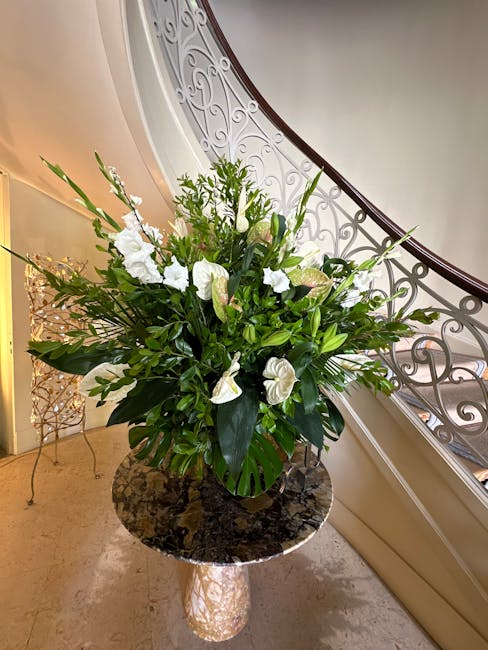
Common Mistakes to Avoid
A surprising amount of office flower spend gets lost in avoidable errors. The arrangements themselves may be lovely, but the contract is where things go off track.
- Buying too big, too soon. It is tempting to over-order for impact, but oversized arrangements can overwhelm the space and the budget.
- Ignoring the layout. A design that looks good in a showroom may not work on a narrow side table or in a cramped lobby.
- Forgetting the service terms. Always check what happens if a delivery is missed, delayed, or unsuitable.
- Not specifying the colour palette. If your brand leans neutral, a bright mixed arrangement may feel off.
- Skipping the review stage. What looked right in week one may feel wrong by week four.
- Comparing only the headline price. A cheaper contract can be worse value if it excludes setup or uses lower-impact arrangements.
One of the classic mistakes is treating flowers as a one-off purchase rather than an office system. The best offices think in cycles: arrival, display, refresh, reset. Once you do that, pricing becomes easier to understand. The budget is not just for flowers; it is for consistency. That distinction matters.
Tools, Resources and Recommendations
You do not need a complicated toolkit to manage corporate flowers well, but a few basic resources help the process run smoothly.
- A simple office calendar: use it to track delivery dates, especially around bank holidays.
- Space notes: record where each arrangement sits, what size works, and any access issues for delivery.
- Photo references: keep quick snapshots of setups you like. It makes reordering much easier.
- Budget bands: decide the spend range before ordering, so approvals are faster.
- Maintenance notes: if your team changes water or moves displays, write down who does what.
From a product perspective, office contracts often work well with versatile flowers that hold shape and look balanced in professional settings. A few reliable options are alstroemeria, carnations, chrysanthemums, germini, lilies, and hydrangeas. If you are choosing stems for a more structured office display, you may want to explore categories like alstroemeria, carnations, or lilies. Those varieties can be practical as well as attractive.
For premium client areas, some businesses prefer a more polished look from luxury flowers or elegant vase-based designs from flowers in a vase. If the office is cost-conscious, the budget-friendly flower options in Maida Vale are worth comparing too. There is no need to overcomplicate it. Good office flowers are usually the ones that look right and hold up well.
Law, Compliance, Standards, or Best Practice
Corporate flower contracts are not heavily regulated in the way some other business services are, but a few sensible UK best-practice points are worth keeping in mind. First, the contract should be clear on what is included, when it is delivered, and what happens if something goes wrong. That may sound obvious, yet unclear service terms are where most frustrations start.
Second, if the flowers are going into a shared building, it is wise to think about access, safety, and building rules. Lifts, concierge arrangements, reception desks, and restricted delivery windows can all affect service. In offices with visitors or public access, arrangements should not create trip hazards or block visibility. Keep them stable, especially near entrances.
Third, many businesses now ask about sustainability and sourcing. That is reasonable. If your brand cares about waste reduction, you may want to ask how flowers are sourced, how packaging is handled, and whether containers are reused where practical. You can also review the provider's sustainability information and modern slavery statement if supplier ethics are part of your procurement checks.
Finally, make sure the payment process is appropriate for your finance team. Corporate ordering often runs more smoothly when billing, payment timing, and account setup are agreed in advance. The site's payment details and privacy policy are useful references when handling business data and purchase workflows. If you need the practical terms, review the terms and conditions too.
That is the sensible approach: keep the arrangement beautiful, but keep the paperwork boring. Boring is good here. Boring means predictable.
Options, Methods, or Comparison Table
Different office flower setups suit different budgets and usage patterns. Here is a simple comparison to help you think it through.
| Option | Best for | Typical price shape | Pros | Trade-offs |
|---|---|---|---|---|
| One-off office order | Events, launches, meetings | Single purchase, variable by style | Flexible, easy to test | No long-term consistency |
| Weekly contract | Client-facing receptions | Higher recurring spend | Most polished, always fresh | Needs tighter budget control |
| Fortnightly contract | Smaller offices, lower footfall | Moderate recurring spend | Good balance of cost and impact | Less frequent refresh |
| Monthly statement pieces | Boardrooms or special areas | Lower recurring spend | Simple to manage | Not ideal for high-traffic areas |
If you are comparing styles rather than service frequency, it can help to think in visual language. Calm neutrals work well for formal interiors. Mixed seasonal colours feel livelier. White and green combinations usually feel crisp and professional. For an office that wants more warmth, muted pinks or gentle purples can soften the room without making it look too decorative.
Case Study or Real-World Example
Here is a realistic example. A small Maida Vale consultancy has a reception desk, one client waiting area, and a meeting room that gets used most weekdays. The team wants the office to feel considered, but they do not want a big monthly commitment. The solution is a fortnightly contract with one medium reception arrangement and one smaller meeting-room arrangement on the same delivery day.
At first, the client asks for something bright and generous. After a couple of weeks, though, it becomes clear that the meeting room is better served by a lower, more compact design. The reception can handle the larger colour statement, but the boardroom looks better with a cleaner, calmer palette. The contract is adjusted. Not dramatically. Just enough to suit the actual space.
That kind of adjustment is common. A contract should be flexible enough to learn from the building. In the real world, flower styling is rarely "set and forget". Offices change diary pressure, season, visitor flow, and even furniture layout. A good provider will notice that and help you tweak the plan. If they do not, that is usually the moment to ask better questions. A very ordinary but important one: does this arrangement still make sense here?
For more frequent local delivery needs, businesses sometimes use the broader best flower delivery in Maida Vale options alongside a contract, especially when they need occasional extras. That hybrid approach can be smart if your office is busier at some times of year than others.
Practical Checklist
Use this checklist before you sign off a corporate flower contract. It saves time and, more importantly, awkward email threads later.
- Have you defined the purpose of the flowers?
- Do you know which rooms or areas will be styled?
- Have you chosen a realistic refresh frequency?
- Is the contract price fully inclusive, or are there extras?
- Are delivery times compatible with office access?
- Have you confirmed who receives and places the flowers?
- Is the colour palette aligned with the office interior or brand?
- Have you checked what happens on bank holidays and seasonal closures?
- Do you know how changes or cancellations are handled?
- Have you reviewed sustainability, payment, and policy details?
Expert summary: the best office flower contracts are not the fanciest ones. They are the ones that fit the room, fit the budget, and fit the rhythm of the business. If those three things line up, you are usually in good shape.
Conclusion
Corporate flowers should feel easy to approve and easy to live with. In Maida Vale, where many offices value style but still need practical control over spending, the right contract is usually one that balances presentation with predictability. A good arrangement does not shout. It simply makes the space feel better, every week, without fuss.
The real trick is to treat pricing as part of the design conversation, not something you only look at at the end. Once you decide how often the flowers need refreshing, where they will sit, and what image they need to support, the numbers become much easier to judge. That is usually where the best decisions get made.
And if you are still weighing up whether a contract is worth it, ask yourself this: would the office feel less complete without it? If the answer is yes, even quietly yes, then you are probably looking at a worthwhile investment.
Get a free quote today and see how much you can save.
When the flowers are right, the room settles into itself. Funny how that works, really.
Frequently Asked Questions
What does a corporate flower contract usually include?
Most contracts cover regular flower deliveries, arrangement design, and sometimes vase hire or setup. The exact inclusions vary, so it is worth checking whether delivery and replacement are part of the agreed price.
How are office flower prices usually calculated?
Pricing is usually based on flower choice, arrangement size, frequency of refresh, delivery needs, and whether the design is bespoke. Seasonal flowers and simpler containers often cost less than premium, custom-styled displays.
Is a weekly contract better than a monthly one?
Not always. Weekly service suits busy reception areas and high visitor traffic, while monthly arrangements can work well for boardrooms or quieter offices. The right option depends on how visible the flowers are and how fresh you want them to look.
Can I change the arrangement style after the contract starts?
Usually yes, though it depends on the provider's terms. Many businesses refine the setup after the first few deliveries because the real office environment is often different from what they expected.
Do corporate flowers need special maintenance from staff?
Some do, but it depends on the service model. A full service may include everything, while simpler contracts might expect staff to top up water or move the arrangement between deliveries. Always clarify this in advance.
What are the best flowers for a professional office?
Popular choices include lilies, alstroemeria, carnations, chrysanthemums, germini, and hydrangeas. These tend to hold up well and can be styled in a clean, professional way.
How do I choose flowers that suit a Maida Vale office?
Start with the interior style, brand colours, and available space. Maida Vale offices often benefit from elegant, calm arrangements that look good in both older buildings and more contemporary workspaces.
Are contract flowers more cost-effective than one-off orders?
They often are if you need flowers regularly. A contract can reduce the amount of last-minute ordering and usually gives you clearer control over spend. If you only need flowers occasionally, one-off orders may be the better fit.
What should I ask before signing a corporate flower contract?
Ask what is included, how often flowers are replaced, whether vases are supplied, how delivery works, what happens during holidays, and how price changes are handled. Those are the questions that matter most.
Can corporate flower contracts support sustainability goals?
Yes, they can. Many offices prefer seasonal flowers, reusable containers, and lower-waste presentation. It is sensible to ask how sourcing and packaging are handled if sustainability is important to your business.
What if my office has limited space?
Then smaller, lower arrangements are usually the way to go. Compact reception pieces or a single well-placed display can look better than a large bouquet that dominates the desk or walkway.
How do I compare different providers fairly?
Compare the full service, not just the headline price. Check frequency, delivery, vase hire, replacement policy, and the quality of the examples they show. A slightly higher price can be better value if the presentation and service are more reliable.